There is something strange happening between men and women today.
Women are tired. Men are tired. Women say, “We have carried too much for too long.” Men say, “We have carried too much for too long.” Actually, both are not wrong. They’ve simply lived through different situations and carried different kinds of burdens. For thousands of years, society built very particular expectations around men and women. Men were expected to provide, protect, build, lead, endure, fight, establish themselves and carry responsibility. Women were expected to nurture, manage the home, bear children, care for families and adapt themselves to the structures they were born or married into.
Neither side was free. The burdens were simply different. I’ve been watching Sadhguru exclusive of Mahabharatam series, and realised that Indian civilisation itself gives us extraordinary examples of men carrying enormous expectations. Rama carries the weight of dharma, family and kingship. Arjuna stands on a battlefield and breaks down because he cannot reconcile his duty with his emotions. Yudhishtira carries the burden of moral responsibility. Bheeshma sacrifices an entire personal life for a vow. Kings were expected to protect kingdoms, uphold order and accept consequences larger than themselves.
The ideal man was never merely a strong body. He was expected to become strong enough that his impulses did not govern him. But that expectation did not mean he was not allowed to feel. Arjuna cried. Rama grieved. Men loved, lost, mourned, became confused and sought counsel. The point was never that a man should feel nothing. It is that he was expected to eventually stand up and act. And women had their own enormous burdens.
They were expected to bear children, preserve households, care for elders, adjust to marital families, maintain relationships and carry responsibilities that were often invisible precisely because they were considered “women’s duties.” And then there was male dominance, followed by so many structured rules of society dictating how women should behave, down to the smallest details possible. For generations, many women simply endured.
But something changed. Women began to say - Enough. They stood up for themselves. Took action. They began educating themselves, earning, leaving abusive situations, building careers and living independently. Questioning marriage, motherhood, all the assumptions that a woman must automatically leave her home and enter her husband’s family, the idea that her worth was determined by how well she served everyone around her….etc
They did not merely complain about the old system. They began dismantling their position within it. And that transformation has been really huge. ⸻ But what happened to men? Let’s look at this honestly! At least in my understanding…. Men have also been deeply hurt by the same old system. They were taught that their worth depended on achievement. Earn. Provide. Protect. Build. Be successful. Don’t be afraid. Don’t fail. Don’t show weakness. Be the man everyone can depend upon.
And many men have spent their entire lives trying to become exactly that. But when the world began changing, something unexpected happened. Women began stepping outside their traditional roles. They began earning, leading, building businesses, living independently, choosing partners rather than simply being chosen! Suddenly the old definition of masculinity began losing some of its certainty. Feminism started. Followed by so much controversy….
The man who was once automatically considered the provider was now sometimes living beside a woman who earned as much as or more than him. The man who was expected to lead was now challenged by a woman who could lead herself. The man who was expected to be indispensable discovered that a woman could survive without him. And for some men, this was liberating. For others, it was terrifying. Because if masculinity had always meant:
“I am valuable because I can provide, protect and lead. I am stronger than you, so I am superior!” then what happens when the woman beside is also strong enough, can also provide, protect and lead? Who are you now? ⸻ This is where I think many men are stuck, stuck between two worlds. The old world still tells them: Be a man. Earn. Provide. Protect. Be strong. The new world tells them: You don’t have to be the sole provider. You can be vulnerable. You can express yourself. You don’t have to carry everything alone.
There is nothing wrong with the second message. Men deserve emotional freedom, friendship, tenderness. Men deserve to cry. Men deserve help. Here is what’s very, very important - Something gets lost when emotional freedom becomes an excuse to abandon responsibility. There is a difference between saying “I am struggling. I need help, and saying “I am struggling, therefore somebody else must carry my life.”
The first one is courage. The second is surrender.
Arjuna asked Krishna for help. But Krishna did not fight Arjuna’s battle for him. He gave him clarity. And Arjuna picked up the bow. That difference…! It may be one of the most important lessons. You don’t have to become emotionless. You have to become capable. This is where I think modern conversations about masculinity are going wrong. Right now, men are put in a position to choose between two extremes, or at least that’s how it has been understood by many!
Either: Be the alpha. Never cry. Dominate. Or: Reject traditional masculinity entirely. You don’t have to be strong, responsible or capable. Why should those be the only choices when there is another possibility?? Become strong enough to be gentle. Become financially capable. Learn to regulate yourself. Build something. Take care of your body. Know how to make decisions. Learn how to apologise and repair a relationship. Know how to sit with discomfort, how to ask for help, how to give help, how to protect without controlling, how to love without becoming dependent.
And if you cry, cry.
Then wipe your face and continue. Not because crying is shameful. Because your life still needs to be lived after the tears. ⸻ And this is where what women are asking for should not be ignored! When a woman says: “I want a man who provides,” what she is really saying may be: “I want enough stability in my relationship so I don’t have to live in survival mode.” When she says: “I want to be feminine,” it doesn’t mean “I want to be helpless.”
She means “I want space to create, nurture, dance, sing, learn, love, explore, rest and simply be alive without constantly having to fight for survival.” There is nothing shameful about wanting that. The feminine has never meant weakness. Look at Shakti - Durga, Kali, Parvati… they’re not weak! They represent power! What is truly feminine has always been connected to Shakti. Sadhguru says Linga Bhairavi is a true form of feminine energy. It is also associated with creation, nourishment, beauty, relationship, fertility, abundance and life.
Obviously, keeping masculine and feminine aside, men will naturally compare themselves with others who are the same in physical nature. Here I am talking about physiology. Same with women. Men want to see themselves as a hero, Shiva or Krishna. They never see themselves in Radha or Sita, right!? Same with women. Women see themselves in similar physical representations everywhere… heroines, all forms of Devi. So naturally, these are the qualities both want to carry for themselves and nurture.
A woman should not have to become hard simply to prove that she is capable. She should be able to be capable and soft, strong and receptive, independent and nurtured, ambitious and creative. ⸻ But men deserve something too. Men deserve a world where their worth is not determined entirely by how much they earn. They deserve permission to say: “I’m exhausted”, to be loved when they fail, a partner who sometimes takes care of them, affection, to be held and to have bad days.
But being cared for is not the same as being relieved of responsibility.
A man can be nurtured by a woman without becoming dependent on her. He can be pampered without becoming entitled. He can cry without becoming helpless. He can ask for reassurance without demanding that his partner chase him every time there is conflict. He can be vulnerable without abandoning accountability. That is the balance. ⸻ And relationships reveal this conflict more clearly than anything else. There is a difference between wanting your partner to care for you and expecting your partner to emotionally carry you.
A difference between wanting to be pampered and demanding to be chased. A difference between being hurt and refusing accountability. A difference between vulnerability and manipulation. If you made the mistake, apologise. If she made the mistake, let her apologise. If both made mistakes, both apologise! If one person is hurting, the other can offer comfort. It shouldn’t matter whether the person is a man or woman.
The person responsible for the wound should be willing to repair it.
Love should not become a competition over who gets to be the one who is convinced, pampered and pursued. The problem isn’t that men are becoming emotional......The problem is, when men become passive while still demanding masculine privilege. You cannot say “I don’t want the responsibility of building myself, earning, providing, protecting or making difficult decisions,” and at the same time say “But I still want authority, obedience, admiration and control because I am the man.”
That isn’t masculinity.
That is taking the privileges of a role while rejecting its responsibilities. The same principle must apply to women. A woman cannot say “I am completely independent and owe nobody anything,” and then demand that a man provide and protect just because he’s a man! If we are rebuilding the social contract, we have to rebuild it for both….. ⸻ Women have already begun rebuilding themselves. That is why the response from women can sometimes feel so strong now.
Women have been pushed for generations to adapt.
So when she finally learns to stand on her own feet, she does not easily want to return to the position where she has to depend on someone else’s willingness to protect her. She has discovered - "I can do this myself." And that is a powerful realisation. But women shouldn’t have to say: “We don’t need men.” And it isn’t for men to say: “Women have become too independent.” Perhaps the next step is - “We don’t need to carry everything alone anymore.”
⸻ Men, you don’t have to compete with women. This may be the biggest trap of this generation. A woman earning more than you does not make you less of a man. Her being more successful does not diminish you. Her being independent does not make you unnecessary. You don’t need to pull her down to feel tall. You don’t need to dominate her to prove masculinity. You don’t need to control her because you are afraid of losing your place.
Build yourself instead.
Become so grounded in who you are that another person’s success doesn’t threaten you. If she is stronger in one area, learn from her. If you are stronger in another, support her. Stop measuring your worth against hers. Build beside her. ⸻ And women, you don’t have to fight forever either. Perhaps this is the part men need to understand. When a woman keeps fighting, it doesn’t necessarily mean she wants to fight. Sometimes she is fighting because she has learned that if she doesn’t protect herself, nobody else will. She has learned to earn because she cannot depend on anyone. She has learned to make every decision because someone else won’t. She has learned to carry everything because putting something down feels dangerous.
So when she finally says “I want to rest. I want to be taken care of. I want to feel safe”, don’t interpret that as weakness. It may be the deepest expression of trust she knows how to give. ⸻ Wipe your tears and build again. Men, you have suffered too. Your suffering is real. The pressure placed upon you was real. The loneliness of being expected to always know what to do was real. The fear of failure was real. The burden of being responsible for everyone was real.
You are allowed to acknowledge that. But don’t stop there. Use that pain. Women did. They took generations of frustration and turned it into education, independence, careers, movements, businesses, voices and choices. You can do the same. Take the pain, exhaustion and fear of being told that you must always be strong and ask: What kind of strength do I actually want? What kind of life do I actually want to build? Who am I when nobody is applauding me?
Take the loss of the old masculine identity and build a better one. Not an “alpha”, a dictator, an emotionally absent provider or a helpless child! But a man who is capable, compassionate, responsible, emotionally alive and internally anchored. A man who can say “I don’t know,” and then learn, “I’m hurt,” and then heal, “I need help,” and then stand up, “I love you,” and still remain himself. “You are stronger than me here,” and not feel threatened, “I will take care of this,” and mean it.
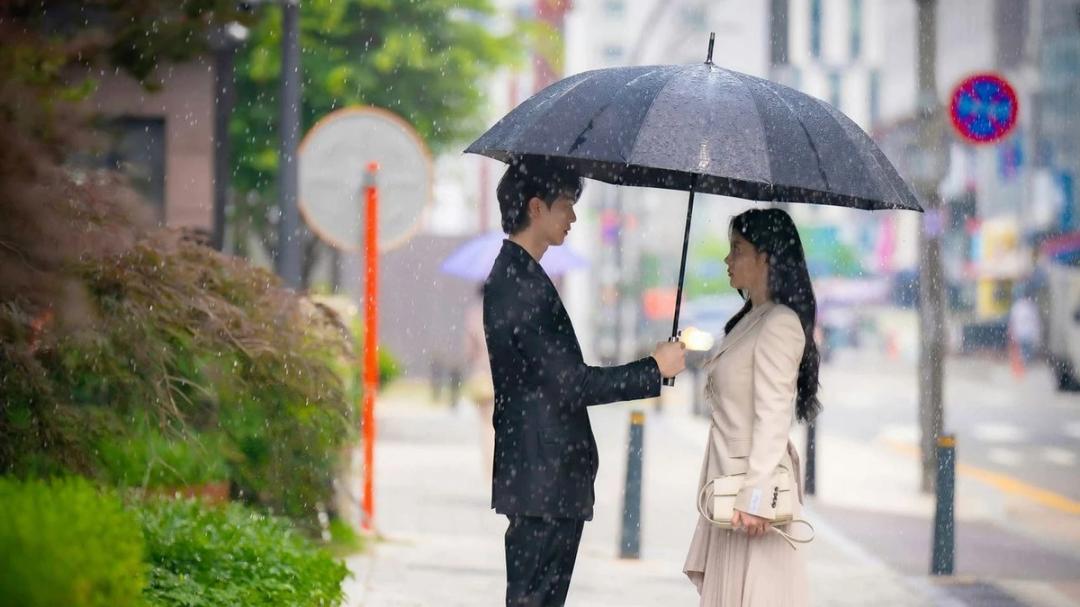
Because perhaps this is what women have been waiting for. Not another man telling them “You don’t need to be independent, Stay in your place.” Not another man asking them to become smaller so he can feel bigger, But a man who looks at a woman who has fought her way through the world and says: “You don’t have to fight me too.” “I’m here.” “Let us build this together.” And then actually builds. Not with words. But with his life, work, stability, integrity, his ability to take responsibility, willingness to protect without possessing, capacity to love without becoming dependent, and with enough inner strength that the woman beside him can finally put down the sword she has been carrying for so long.
Not because she is weaker. But because she finally knows she doesn’t have to fight alone. I think that is the next evolution of masculinity. Not becoming harder. Not becoming softer. Becoming whole. And for the next evolution of femininity, it is not becoming independent forever. It is becoming free enough to choose when to stand, when to fight, when to create—and when to rest. Because ultimately, beyond man and woman, beyond husband and wife, beyond every role society has handed us, there is the same human question:
Can I become responsible for myself enough that the person beside me is free to become more fully themselves? That is where partnership begins.
And perhaps that is where the old battle between masculine and feminine finally ends.